
|
|
|
 |
 |
 |
 |
 |
 |
 |
 |
 |
 |
 |
 |
 |
 |
 |
 |
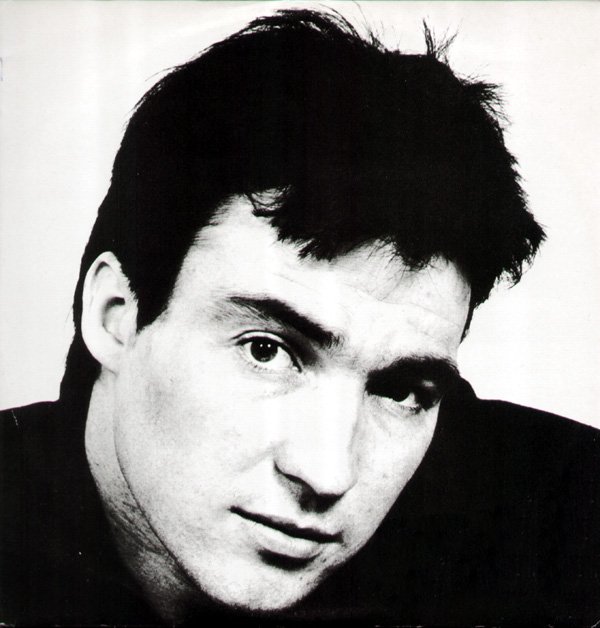
Paul Gardiner.
1st May 1958 - 18th February 1984
Profile: Paul Andrew Gardiner was born in Hayes, Middlesex. In early 1976 he was playing with the Lasers Gary (then using his real name, Gary Webb) auditioned as lead guitarist. The two became friends and when Gary left the band soon after, Gardiner followed. The pair formed Tubeway Army, initially with Jess Lidyard on drums. In October 1977, the band was signed to the independent label Beggars Banquet and released their first single, "That's Too Bad", in February 1978. The trio used assumed names, Gardiner's being 'Scarlett'. An ever-changing line-up played gigs over the next few months, Gardiner and Numan being the only constant members. Settling back to a three-piece outfit with Lidyard, the band released two studio albums as Tubeway Army, an eponymously titled debut in 1978 and the No. 1 hit Replicas in 1979. When Numan dropped the name Tubeway Army in mid-1979, Gardiner remained as bassist, playing on the No. 1 albums The Pleasure Principle and Telekon, and toured with Numan throughout the world in 1979–81. Following Gary's 'retirement' in April 1981, after final concerts at Wembley Arena, his backing band went its separate ways. Most of the members formed a new group called Dramatis, while Gardiner elected to concentrate on a solo career. Gardiner's debut solo release was a single co-written with Numan called "Stormtrooper in Drag" b/w "Night Talk" in 1981. It made No. 49 in the UK Singles Chart. On these tracks Gardiner and Numan were credited with guitar and bass, respectively; Gardiner also played synthesizer. Gardiner's recording of The Velvet Underground's "Venus in Furs" was the first release on Numan's own label, Numa, in 1984. The single's B-side, "No Sense", was written by Gardiner. Aside from work on solo projects, he played with Dramatis in 1982 and, shortly before his death, worked with Marc Anthony Thompson of Chocolate Genius, Inc. on the latter's debut solo studio album. For a full biography (Paul Gardiner) |
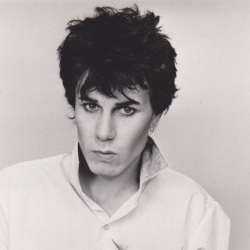
James Freud.
29th June 1959 - 4th November 2010
Freud was born as Colin Joseph McGlinchey to Joe and Hannah McGlinchey and grew up in Melbourne, Australia. His interest in music began before he started school. "From the time I was five, I realised that was what I wanted to do. My uncle gave me all Frankie Avalon records and I just loved them. That was it, that was all I wanted to do". His father left the family when Freud was in his early teens. He attended St Thomas More Catholic Boys College in Vermont South (now part of Emmaus College). Despite Freud's passion and musical talent, his mother, Hannah, was against the idea. He later changed his name to James Randall Freud. At the age of 17, Freud left to pursue his career and did not contact her for over two years. "We didn't communicate in any way until I could validate myself as a musician". Early career (1976–1982) Freud formed his first band, Sabre, at the age of 16, with high school friend and guitarist Sean Kelly and drummer Ian McFarlane. Their first performance was at his younger sister's slumber party. After hearing the Sex Pistols' song "God Save the Queen" in 1977, Freud formed The Spred with Kelly, and three other members. Formed late in 1977, Teenage Radio Stars was a glam-punk band with Freud on lead vocals and guitar and Kelly on guitar and vocals. When the opportunity came to record a single, "I Wanna Be Your Baby", later covered by Uncanny X-Men, two members were fired. Mick Prague and Mark Harvey joined the band and performed "I Wanna Be Your Baby" on Countdown. By early 1979, with ex-members of Colt, he formed James Freud & the Radio Stars with Murray Doherty on bass guitar, Roger Mason on keyboards, Glenn McGrath on drums and Bryan Thomas on guitar, and later Tony Harvey playing guitar and Mick Prague on bass. This line up plus various guest artists recorded the album Breaking Silence between July and November 1979, with Tony Lugton and Peter Cook contributing before the completion and release in 1980. The former Colt members, Murray Doherty, Glenn McGrath and Bryan Thomas went on to form local Melbourne band Mod Cons and added vocalist/guitarist Derek Beautyman in 1980. Later, Tony Lugton (ex-Steeler) replaced Harvey on guitar and also provided keyboards. Further changes by year's end resulted in Freud and Mason joined by Peter Cook on guitar and backing vocals and Tommy Hosie on drums. They signed with Mushroom Records and their debut single, "Modern Girl," from Breaking Silence was released in May 1980, which peaked at No. 12 on the Australian Kent Music Report Singles Chart. They supported British singer-keyboardist, Gary Numan on his Australian tour. James was also originally going to be Numan's support band for the UK leg of the Telekon tour (Teletour) but was dropped and Nash the Slash was given the slot. James Freud & the Radio Stars' debut album Breaking Silence was released in June, it was produced by Tony Cohen. Breaking Silence impressed Numan such that he offered to produce an album for Freud in the UK. Because there was already a British band known as the Radio Stars, a name change occurred for Freud's backing band, who became known as James Freud & Berlin. In October, they released "Enemy Lines" from Breaking Silence. "Automatic Crazy", produced by Numan, followed in March 1981. However, neither Freud nor Numan were happy with the London-recorded album and it was not released. One month later Freud disbanded the group. For a full biography (James Freud) |
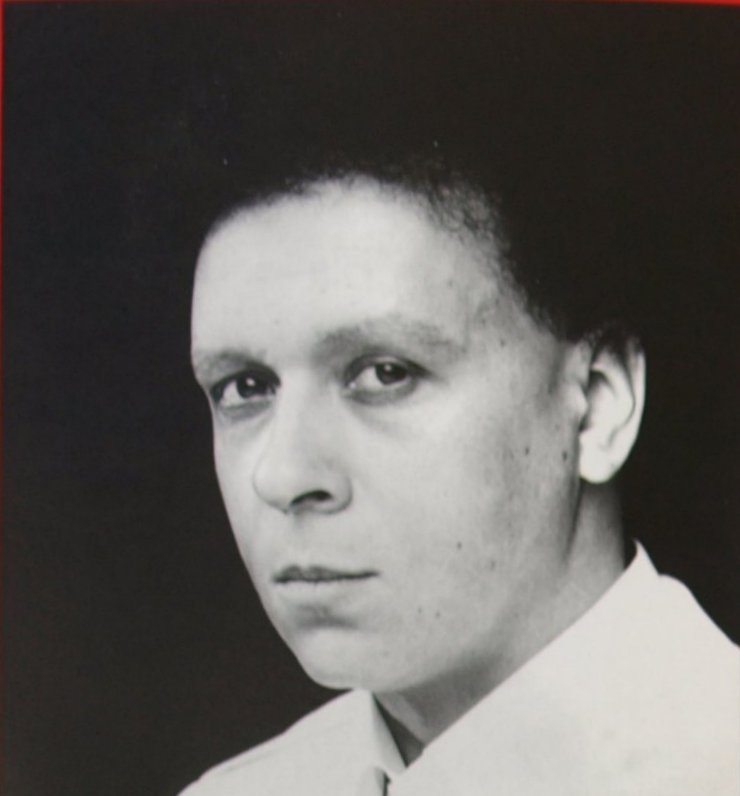
Cedric Sharpley.
2 July 1952 – 13 March 2012
|
Cedric Larry Sharpley was born on 2 July 1952 and was a South African-born musician who was the drummer with several bands in the 1970s and 1980s, including Gary Numan, Tubeway Army, Druid and Dramatis. With Numan, Sharpley played on five studio albums including the UK number ones The Pleasure Principle and Telekon.
Druid Sharpley was born in Cape Town in 1952, and moved with his family to Hertfordshire, England, in the 1960s. In the early 1970s, he co-founded the progressive rock band Druid with Neil Brewer, Andrew McCrorie-Shand and Dane Stevens, releasing two albums with them and performing on The Old Grey Whistle Test in 1975. Druid split in 1977, and Sharpley went on to join Gary Numan's band Tubeway Army in the spring of 1979, replacing Numan's uncle Jess Lidyard on drums. Tubeway Army and Gary Numan Sharpley's arrival in Tubeway Army coincided with the track "Are "Friends" Electric?" progressing up the UK charts to number one at the end of June 1979. He performed the song with the band on Top of the Pops and The Old Grey Whistle Test along with "Down in the Park". A session recorded for John Peel, also in June, was credited solely to Gary Numan, and the Tubeway Army name was subsequently dropped, although Sharpley, bass guitarist Paul Gardiner and keyboard players Billy Currie and Chris Payne remained with Numan as his backing band. Numan's first album under his own name, The Pleasure Principle, reached number one in the UK charts, as did the lead single, "Cars". The song also reached the top of the charts in Canada, and is Numan's most successful single. The follow-up single, "Complex", reached number six in the UK in November. In 1980, Sharpley appeared on Numan's second album, Telekon, which also reached number one in the UK, and which included the hit singles "We Are Glass", "I Die: You Die" and "This Wreckage". The following year, Numan temporarily retired from touring, although he released his third album, Dance in September, which also featured Sharpley. Dance reached number three in the UK, and the single "She's Got Claws" reached number six in September 1981. While with Numan, Sharpley worked with Currie and Payne on the track "Fade to Grey", which was initially considered to be released as a Currie and Payne single, but which eventually became part of the Visage project with Midge Ure and Steve Strange. The song reached number eight in the UK singles chart. Dramatis and later career After Numan's temporary retirement from touring in 1981, Sharpley, Payne, guitarist Rrussell Bell and keyboard player Denis Haines formed the synth-pop band Dramatis. They released the album For Future Reference that year, although it failed to chart. The second single from the album, "Love Needs No Disguise", featured Numan on vocals and reached number 33 in the UK charts, and a later single, "I Can See Her Now", reached number 57. Sharpley later returned to work with Numan again on the albums Warriors and Berserker, and rejoined his live band when touring resumed. His later career included rejoining his Druid bandmate Neil Brewer in the bands Frame by Frame and Tinderfish. Dramatis had intended to reform in 2012, but this was put on hold after Sharpley's death that year. A single, "A Torment of Angels", was finally released in 2020, and Bell stated in an interview, "To be honest, losing Ced was a massive blow that seriously knocked us back. Even now, whenever I program a drum track, I always try to imagine what Ced might have played and attempt that." For a full biography (Cedric Sharpley) |
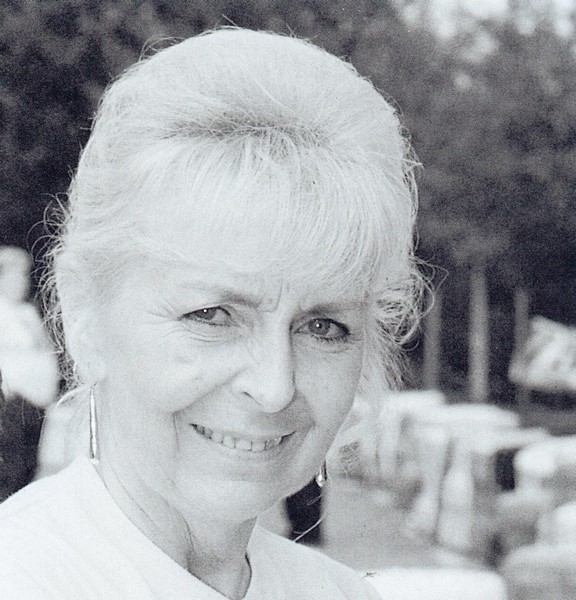
Beryl Webb.
1938 - 7th June 2016
|
Profile: Mother of Gary, for whom she was the fan club secretary, wardrobe supervisor, hairdresser, make-up artist, and costume maker. Sister of Jess Lidyard Gary Numan: June 7, 2016. My Mum died today, and I am heartbroken beyond measure. It cannot be possible that a better Mother has ever existed. I have been wrapped in love, care and kindness since the second I was born. It never wavered, not once, no matter what I did, or how often I let her down. Absolute and unconditional. Beautiful. She has guided and helped my brother John and I through every stage of our lives, from tiny babies to the men we are today. Through triumphs and disasters, successes and failures, great things, and shameful things. She has been there to lift us higher, or help get us back on our feet. There is nothing she wouldn't do, at any time, throughout my entire life, if she thought it would help, even if it was just to make us smile. She made us feel anything was possible, that we could do anything, be anything, and she gave us the courage to try. I have only good memories. My childhood is one long happy memory of being, along with my Dad and John, the most important thing in the world, her world. Always safe, always secure, always loved. That blanket of love, that cocoon of protection and support, gave me a start in life that I was never able to repay, and it has comforted me every day that I have breathed air. She made us laugh, kept our secrets, joined our battles, surrounded us with warmth and never ending affection. She was remarkable, unique, and so I find myself sitting here, filled with a sadness that constantly overflows. Shocked at the speed at which it all came to an end. I love her so much, I have so much to be grateful to her for, so much to be thankful to her for. It's impossible to truly grasp that I will never see her again, that I will never talk to her again. I have a lot of pain still to come, but it will be a good pain. Every tear will be a witness to the love she earned, the love she deserves. Every sob will be a celebration of the never ending love she leaves behind. Her long, defiant battle against many forms of cancer has been a shining inspiration, not just to me, but to so many other people that she helped along the way. She seemed genuinely indestructible. So much so, that I think sometimes, the true horror of what she was fighting, and the enormous suffering she endured, seemed almost as nothing. She bore it all with such incredible courage that she made it seem far less than it really was. Where others have succumbed to this horrific disease at the first hurdle, she has run countless marathons and more, for decades, and literally fought to the very last breath. Not only did she never complain, as breast, skin, throat and bone cancers attacked her relentlessly, she laughed, for year, after year, after year. I have never seen bravery like it. But now she's gone, and I am alone in the dark. These words are clumsy and do her no justice at all, and I'm so sorry for that. I wish I could do better. But, I am broken. But, broken or not, a word also about my Dad. I have always admired my Dad beyond all other men. He is the man that, and I'm not sure even to this day that he's aware of this, set every standard for me to aspire to, in all those areas that are truly important. Loyalty, integrity, courage, kindness and generosity, to name but a few. Before I had a family of my own his praise was the only praise that mattered to me. It's still hugely important. He is a good man, and the best father I could ever wish for. But, if I loved him absolutely before today, and I did, I love him far more now. The love and care that he has given my Mum in her final days has been nothing short of incredible. No matter how sad it has been, it has been a beautiful thing to witness. Such total love and devotion is a very rare thing. After sixty years together they still laughed and played like love struck teenagers, sharing every moment in a bond never broken. Through every agonising stage of my Mum's long, long battle, he has been right there by her side, doing whatever needed to be done, and so much more. She could not, would not, have survived all these years without him. What he has gone through these last few weeks I can't begin to imagine. But he has done it with a strength and composure that I can hardly believe. My admiration for him I didn't think could be any higher, but I was wrong. What a fantastic husband he has been to my Mum, what a fantastic father he is to John and I. He is a phenomenal, remarkable human being, and I stand humble but proud in his shadow. What a couple they have been. What an example to the world, as husband and wife, as parents, as grandparents. Truly exceptional. But my Mum has gone, and I miss her. I love her so much, but life will never be the same again. Bye bye Mum. Until I see you again xxxxx. |
Nash The Slash
26th March 1948 - 10th May 2014
|
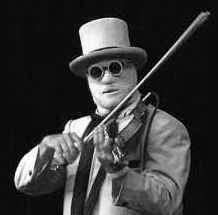
James Jeffrey "Jeff" Plewman, better known by his stage name Nash the Slash, was a Canadian musician. A multi-instrumentalist, he was known primarily for playing the electric violin and mandolin, as well as the synthesizer, keyboards, glockenspiel, and other instruments (sometimes described as "devices" on album notes). Nash worked as a solo artist beginning in 1975; founding the progressive rock band FM in 1976. Soon after releasing the band's first album, Black Noise, in 1977, he left the band; he resumed his solo career in 1978 (it was not until after Nash's departure that the album was widely promoted, eventually charting and receiving a gold record award).[3] He rejoined FM from 1983 to 1988, followed by a brief reunion from 1994 to 1996, all concurrent with his solo work. Nash's music covers an eclectic range, varying from instrumental—mood-setting music, to rock and pop music with vocals. In addition to giving concert performances, he composed and performed soundtrack music for silent films, presenting these works live in movie theatres to accompany screenings of the films. Another venue for his music was in performances to accompany the viewing of paintings by surrealist painter Robert Vanderhorst, an audiovisual collaboration,[4] which took place in 1978 and again in 2004. Nash famously never allowed guitars on any of his solo albums and singles. He turned down Pink Floyd guitarist David Gilmour's offer to lay down a guitar track on his album Children of the Night. Nash was invited by Gary Numan to tour the UK as his support act in 1980 and 1981, and subsequently played on Numan's 1981 LP Dance. He also toured Europe with The Tubes. He was signed to the Dindisc label and in 1981, he released the album Children of the Night in Europe, also released in Canada shortly after. Several British singles were also issued. These records appeared on the Dindisc / Cut-throat label in Europe and on Virgin / Dindisc / Cut-throat in Canada. For a full biography (Nash The Slash) |
Mick Karn
24th July 1958 – 4th January 2011
|
Andonis Michaelides, better known as Mick Karn, was a Greek Cypriot musician who rose to fame as the bassist for the art rock and new wave band Japan. His distinctive fretless bass guitar sound and melodic playing style were a trademark of the band's sound.
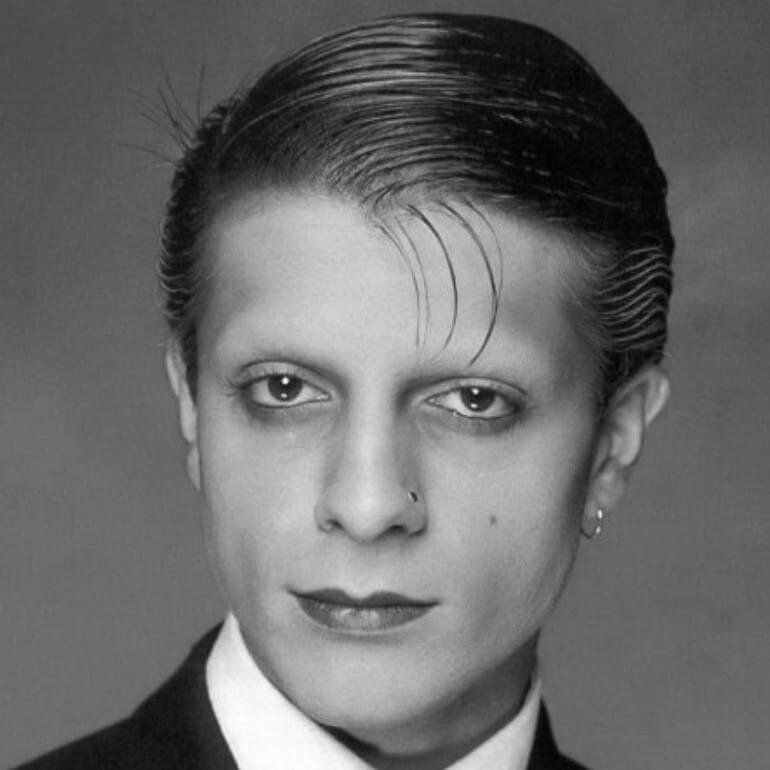
Early life Karn was born Andonis Michaelides in Nicosia. When he was three, his Greek Cypriot parents moved with him to London, where he grew up. In his youth, he began playing mouth organ at the age of seven and violin at the age of eleven, before he took up playing bassoon for the school orchestra. As a bassoon player he performed with the London Schools Symphony Orchestra in a concert in October 1972 which was broadcast by Radio 4. However, when his bassoon was stolen and his school refused to buy him a new one, he bought a bass guitar for £5 from a school friend. At school he became friends with David Sylvian and his younger brother Steve. As an escape from their south London environment, they began to play music together, and in June 1974 they made their first public performance. Japan Initially with Karn as lead vocalist, their band christened themselves Japan in 1974. Joined by keyboardist Richard Barbieri and guitarist Rob Dean the following year, they signed a recording contract with German disco label Hansa in 1977, with which they recorded three studio albums and became an alternative glam rock outfit in the mould of David Bowie, T.Rex, and The New York Dolls.[citation needed] They switched to Virgin Records to record their subsequent albums Gentlemen Take Polaroids and Tin Drum. As the band started to achieve commercial success with the release of Tin Drum and specifically the single "Ghosts", which reached the top five in 1982, tensions and personality conflicts between band members arose. Tin Drum was to be the band's final studio album. Long-simmering differences among the band members came to a head when Karn's girlfriend, photographer Yuka Fujii, moved in with Sylvian, and the individual members forged ahead with their own projects. Karn said in an interview that as tensions with their record company had abated following Japan's commercial success, band members began focusing on personal differences rather than on the common enemy. Session work and solo projects Karn played bass guitar and saxophone on Gary Numan's 1981 No.6 hit "She's Got Claws" and other tracks on its parent No.3 hit album, Dance. In November 1982, Karn released his first solo album, Titles, just as Japan had announced their split. In 1982, Karn wrote some material with Michael Finbarr Murphy, guitarist and writer for Heatwave, Alan Murphy of Level 42, and Diana Ross, among others. They played some low-key gigs around London during the summer of 1982, and then went their separate ways. That same year, Karn appeared on The Old Grey Whistle Test along with Angie Bowie, former wife of David Bowie. In 1982 he also contributed saxophone playing on three tracks on the Swedish band Lustans Lakejer's album En plats i solen, produced by Richard Barbieri. Although Karn submitted an album's worth of demos to Virgin Records as a more pop-oriented follow-up to his debut solo album Titles, the record label declined to fund the record and it was abandoned. In 1983, he collaborated with Midge Ure on the UK top 40 single "After a Fashion", and in 1984, he formed Dalis Car with Peter Murphy. The duo released one album, The Waking Hour, in late 1984. For a full biography (Mick Karn) |
Barry Benn
5th August 1959 - 24th July 2016
|
Barry played drums for Tubeway Army in 1978. The single version recorded on 15 April 1978 and released in July the same year. This session was produced by Kenny Denton, and featured a short-lived band line-up of Numan, Gardiner, Barry Benn, and Sean Burke. It has since appeared on CD reissues of The Plan. The single features a slightly revised lyric: on the demo, the third verse starts with "All the junkies pulling needles from their arms." Beggars Banquet feared that the word "junkies" would prevent the song receiving airplay and so, for the single, Numan changed the line to "All the nurses pulling needles from their arms." A full biography needed (Barry Benn) |
Dick Morrrisey
9th May 1940 – 8th November 2000
|
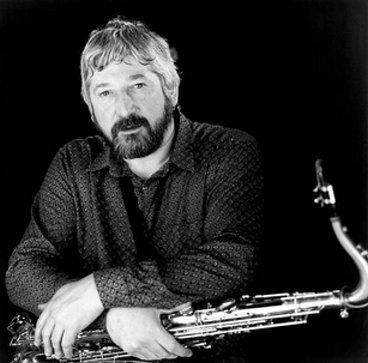
Richard Edwin Morrissey was a British jazz musician and composer. He played the tenor saxophone, soprano saxophone and flute. Background He was born in Horley, Surrey, England. Dick Morrissey emerged in the early 1960s in the wake of Tubby Hayes, Britain’s pre-eminent sax player at the time. Self-taught, he started playing clarinet in his school band, The Delta City Jazzmen, at the age of sixteen with fellow pupils Robin Mayhew (trumpet), Eric Archer (trombone), Steve Pennells (banjo), Glyn Greenfield (drums), and young brother Chris on tea-chest bass. He then joined the Original Climax Jazz Band. Going on to join trumpeter Gus Galbraith's Septet, where alto-sax player Peter King introduced him to Charlie Parker's recordings, he began specialising on tenor saxophone shortly after. Early career Making his name as a hard bop player, he appeared regularly at the Marquee Club from August 1960,[6] and recorded his first solo album at the age of 21, It’s Morrissey, Man! (1961) for Fontana, featuring Stan Jones on piano, Colin Barnes on drums, and The Jazz Couriers founding member Malcolm Cecil on bass. He spent most of 1962 in Calcutta, India as part of the Ashley Kozak Quartet, playing three two-hour sessions seven days a week, before returning to the UK and forming his quartet with Harry South – who had also been in the quartet in Calcutta – on piano. They were joined by former The Jazz Couriers bassist Phil Bates and variously, another ex-The Jazz Couriers member, Bill Eyden, Jackie Dougan or Phil Seamen on drums. The Dick Morrissey Quartet recorded three LPs, Have You Heard? (1963); the live recording Storm Warning! (1965) on Mercury; and Here and Now and Sounding Good! (1966). The quartet, played regular London gigs at The Bull's Head, Barnes and at Ronnie Scott's, whose manager, Pete King, once said that Ronnie's was kept going in those days due to the crowds Dick Morrissey pulled in. During this time he also played extensively in bands led by Ian Hamer and Harry South, including The Six Sounds, featuring Ken Wray and Dick Morrissey, a band which by 1966 had developed into the Ian Hamer Sextet featuring South, Dick Morrissey, Keith Christie, Kenny Napper and Bill Eyden, among other leading UK-based jazz musicians. He also played briefly in Ted Heath's Big Band, which featured many name jazz musicians over the years, as well as appearing as a featured guest on the classic Johnny Dankworth and his Orchestra recording, What the Dickens! and the Harry South Big Band. Likewise, together with fellow tenors Stan Robinson and Al Gay, baritone sax Paul Carroll, and trumpets Ian Carr, Kenny Wheeler and Greg Brown, Dick Morrissey formed part of (Eric Burdon and) The Animals' Big Band that made its one-and-only public appearance at the 5th Annual British Jazz & Blues Festival in Richmond (1965). By the mid-1960s, he had over two consecutive years come in second place behind Hayes in the Melody Maker Jazz Poll (1966 & 1967). Many US musicians touring Britain during the Sixties and early Seventies recorded with him. They included Brother Jack McDuff, a live recording with Jimmy Witherspoon, two LPs with J. J. Jackson, and Sonny Stitt together with guitarist Ernest Ranglin (live at Ronnie Scott's). Dick Morrissey performed regularly at the National Jazz Festival in the 1960s; his last appearance under his own name there was at the 6th festival held at Windsor (1966), although he would return to the festival with If in 1972 for their only appearance. In 1969, Dick Morrissey, by then many-time winner and runner-up of the Melody Maker Jazz Poll, teamed up with another Melody Maker award-winner, guitarist Terry Smith, with whom he had worked in J. J. Jackson’s Band, to form an early jazz-rock group, If. Other collaborations Morrissey also toured and/or recorded with Charly Antolini, Alexis Korner (several albums), Hoagy Carmichael, participating on Hoagy's last album, In Hoagland (1981) featuring Georgie Fame and Annie Ross, with arrangements by Harry South, Mike Carr, Georgie Fame, Brian Auger, Dusty Springfield, Freddie Mack, Pete York, Paul McCartney, Orange Juice, Gary Numan (he appeared on a number of Numan's albums throughout the 1980s), Phil Carmen, Herbie Mann, Shakatak, Peter Gabriel (the solo in "Start" and several other tracks from his third album), Jon Anderson (and as a member of the New Life Band's The Song of Seven Tour in 1980), Demis Roussos, Jon & Vangelis and Vangelis, Gino Vanelli, as well as playing the haunting saxophone solo on the Vangelis composition "Love Theme" for the 1982 film Blade Runner. For a full biography (Dick Morrisey) |
Robert Palmer
19th January 1949 – 26th September 2003
|
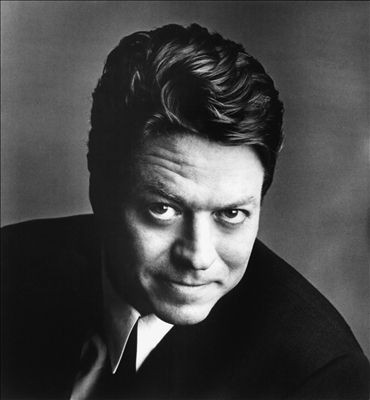
Robert Allen Palmer was an English singer and songwriter. He was known for his powerful and soulful voice, sartorial elegance and stylistic explorations, combining soul, funk, jazz, rock, pop, reggae and blues. His 1985 song "Addicted to Love" and its accompanying video came to "epitomise the glamour and excesses of the 1980s". Early Life When he was only a few months old, he and his family moved to Malta,[7] where his father worked in British naval intelligence. He was influenced as a child by blues, soul, and jazz music played on American Forces Radio and by his parents' musical tastes. His family returned to the UK when he was 12. 1979–1984: Growing mainstream success 1979's Secrets produced his second top 20 single with Moon Martin's "Bad Case of Loving You (Doctor, Doctor)". The number 14 hit also gave Palmer his second Billboard Hot 100 year-end chart hit. 1980 saw the release of the album ‘Clues’, produced by Palmer and featuring Chris Frantz and Gary Numan, which generated hits on both sides of the Atlantic, first with the radio-friendly single ‘Johnny and Mary’ and then ‘Looking for Clues’. Palmer was also playing two tracks in his live sets of Numan, 'Me! I Disconnect From You' and 'Cars'. Palmer later invited Gary to his studio, and Palmer recorded his version of Numan's ‘I Dream of Wires’ included on the album. With catchy music videos matching the synth-pop stylings of new wave gave him much-needed exposure to a younger audience. The success was repeated with the 1982 EP release of 'Some Guys Have All the Luck', which included track 'Style Kills', co written by Palmer and Numan. Going into the 1980s, Palmer's increasing commercial success as a performer fuelled his work as a producer, including on Jamaican ska legend Desmond Dekker's 1981 album Compass Point. In 1984, he helped Island label-mate John Martyn in the production of his album Sapphire. For a full biography (Robert Palmer) |
Ray Coleman
15th June 1937 – 10th September 1996
|
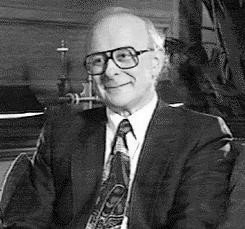
Ray Coleman was a British author and music journalist. Career Coleman was the former editor-in-chief of Melody Maker known for his biographies of The Beatles.[1] Besides Melody Maker, Coleman contributed to music magazines such as Disc, Black Music, and Musicians Only, and a contributor to magazines such as Billboard. An author or co-author of ten books, he was working with Nicky Hopkins on a never-completed biography at the time of Hopkins' death in 1994. Coleman was also near the completion of a Phil Collins biography at the time of his own death in 1996. The book was completed and published in 1997. Coleman was the first journalist to be awarded a Gold Badge of Merit by the British Academy of Songwriters, Composers and Authors for services to British music Coleman as biographer Coleman wrote or co-wrote the biographies of at least a dozen famous musicians. They include the following: Gary Numan: The Authorised Biography (1982) Lennon: The Definitive Biography (1985, updated 1993) McCartney: Yesterday and Today The Carpenters: The Untold Story Clapton: The Authorised Biography of Eric Clapton Frank Sinatra: A Celebration Stone Alone: The Definitive Story of the Rolling Stones (co-written with Bill Wyman) Brian Epstein: The Man Who Made The Beatles Rod Stewart: The Biography I'll Never Walk Alone (co-written with Gerry Marsden) Phil Collins: The Definitive Biography For a full biography (Ray Coleman) |
Dick Wallis
4th February 1953 - 2024
|
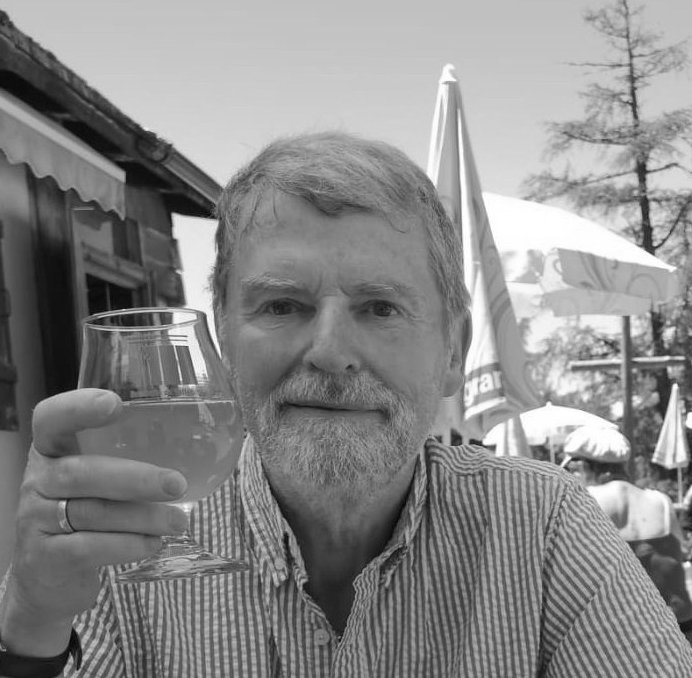
Richard Charles Wallis, better known as Dick Wallis. Numan's official photograher from 1979 to 1983. 'Telekon' studio sessions with the android manikin, red shoes and camera being the most iconic. Richard attended Dulwich College and Cambridge. His love of photography and music led him to choose a bold, entrepreneurial career: Richard (known then as Dick) soon established himself as a professional photographer with roving access at major gigs; he set up a business selling photos by mail order to fans of the bands he covered. The business grew, particularly after he was able to get licences to sell both photos and poster magazines featuring the likes of: Abba, The Rolling Stones, Eric Clapton, Roxy Music, Gary Numan, Duran Duran, Wham and many more. Photographed Events: Kenny Everitt Christmas Show - I Die : You Die, 1979 The Year of the Child - Wembley, 1979 Telekon - Studio Sessions, 1980 Teletour '80 - Hammersmith, 1980 Farewell Concerts - Wembley, 1981 Love Needs No Disguise - Shepperton, 1981 I, Assassin/Gangster Studio Sessions, 1982 Razzamatazz TV appearence, 1982 I, Assassin US Tour, 1982 Warriors studio Session, 1983 Warriors Tour - Hammersmith, 1983 For Richard's memorial page (Dick Wallis) |
Pete Gilbert.
|
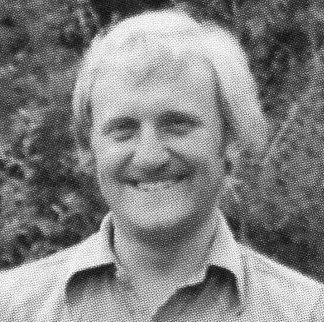
Profile: Peter Gilbert, Co-founder of 'In The City' Magazine. Also did exclusive photoghaphy for the fan club. Interviewed Numan on several occasions for In The City magazine and recorded an exclusive in depth biography for the fan club releases called 'Images'. Promoted events including Disco's with special guests, live bands and Numan's 40th birthday party at 'The Flag' pub. He also did the merchendising stall, along with Frank Drake. For a full biography (Pete Gilbert) |
Rico
23th Jun 1971 - 16th Aug 2022
|
Profile: Ricardo Capuano A.K.A Rico, a self-produced artist from Glasgow, Scotland. His music spanned a variety of styles from electro punk to industrial sound system grooves. His work also appeared on soundtracks to Hollywood movies including 'The Hole' and 'Nasty Neighbours' in addition to many TV shows. Capuano was born in Paisley, Renfrewshire. He was the singer with the band Perfect World in the mid-1990s. Record company interest did not translate into a record deal, and he later went solo, recording as simply Rico. His debut album Sanctuary Medicines was released by EMI/Chrysalis in 1999, and was described by the Glasgow Evening Times as being "as black as it was intense". He supported Gary Numan on his UK tour in 2003, and had a hit with Numan in 2003 with "Crazier", which reached number 13 on the UK Singles Chart. His Second album Violent Silences was released in 2004, and featured collaborations with Numan and Tricky. For a full biography (Rico) |
John Webb
23rd March 1965 - 15th November 2025
|
Profile: Donovan Webb, better known as John Webb. Born in Staines, Middlesex. Adopted brother of Gary Numan, proficient multi-instrumentalist and member of the Gary Numan backing band. In 1977, he performed as 'Johnny Silver' as a punk act. Recorded under the name 'Donavan Silver'. Gary's post - 17th November 2025 The last two days have been the hardest of my life. There have been some mentions recently about me breaking down on stage in Birmingham and Bristol. This is why. My brother John died suddenly in the early hours of Saturday morning in Leeds, he was just 60 years old. He had spent the evening with me at my Telekon show, catching up, swapping stories, telling me about his newly found love of reading. We talked about authors, music, the loves of our lives, children, our Dad, steam trains, aeroplanes, accidents, friends, enemies, just as much as we could squeeze in in the time we had. We were just enjoying being together again as we see each other so rarely these days. We talked for hours before and after the show but, eventually, I had to leave as we had another show in Birmingham later that night. I hugged him at the door of our tour bus, I think it was about 12:20am, asked him how far he had to walk to get to his car (I always worried about him walking the streets at night), it was not far apparently, we said goodbye and I watched him walk away. Sadly he never made it to his car, betrayed by his own heart. I had no idea something had happened to him, and that it had happened so close to where we were, until later that morning when my Dad called with the terrible news. It will haunt me forever that we may have driven off not knowing he was lying in a rainy street just yards away. Luckily a kind person saw him and called an ambulance, but it was too late. This is not a tribute to John, I can barely think straight enough to find the words for this let alone a fitting and deserving tribute to someone I loved more than the world, those words will come in time. This is simply to explain why I’ve been struggling on stage. We are continuing with the tour because my Dad thinks I should, because John’s lovely wife said John would want me to. I have no capacity at the moment to make decisions of any kind. I’m drifting, broken, shell shocked, just watching one foot fall in front of the other. The emotion overwhelms and then backs away, it screams and then whispers. This is the worst moment of my life and I have no idea what to do, other than to continue doing the only thing I know how to do, the thing John was always so proud of. He loved Telekon. He was only 15 when I made it. So this tour is no longer a celebration of an album, it’s a tribute to John, my brother, the best brother a man could ever have. Website (Donavan Silver) |
Andy Coughlan
7th November 1960 - November 24th 2025
|
Andrew 'Wal' Coughlan was born in Sawnsea, Wales. Bass player on Berserker, The Fury and Metal Rhythm albums. Bass player on Berserker, The Fury, Metal Rhythm and The Skin Mechanic UK Tours. Biography wanted (Andy Coughlan) |
Sean Burke
7th January 1958 - May 5th 2026
|
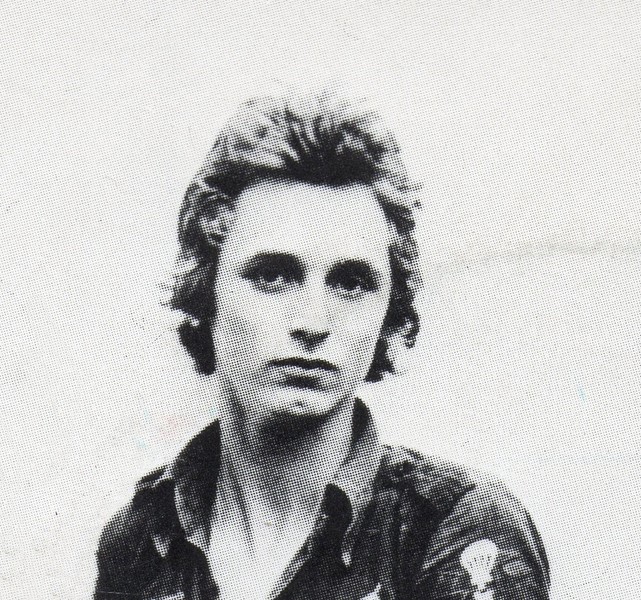
Sean Burke first taste with the music business in 1977 with the punk band Open Sore, whose first release “Vertigo“ is considered a punk classic. Soon after the recording of the live album "Farewell To The Roxy" Burke joined Tubeway Army and recorded the single ‘Bombers”. Burke then briefly joined Robert And The Remoulds and recorded the single "X no 1 / Do eyes ever meet?" He then formed a new band with Open Sore / Tubeway Army drummer Barry Benn which was originally called "The Station Boys", but due to a heavy controlling management the band was pushed into using the name Tubeway Patrol. Because of the Tubeway name and the contractual ties of the management, the band were then dropped by their record company, leading to Burke splitting the band and concentrating on a solo career. He also played guitar for Jayne County. Profile from (Discogs.com) |
Back to Top